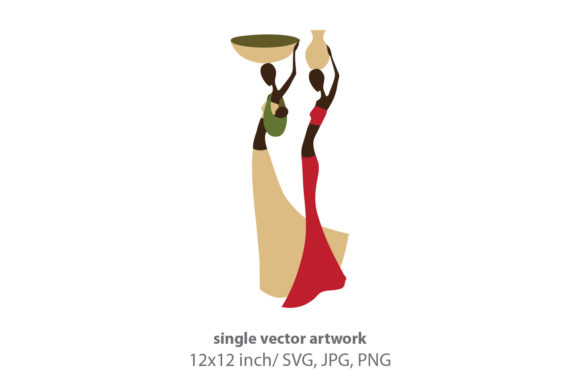
AFRICAN WOMAN
A First Look: Bold, Grounded, and Full of Quiet Strength
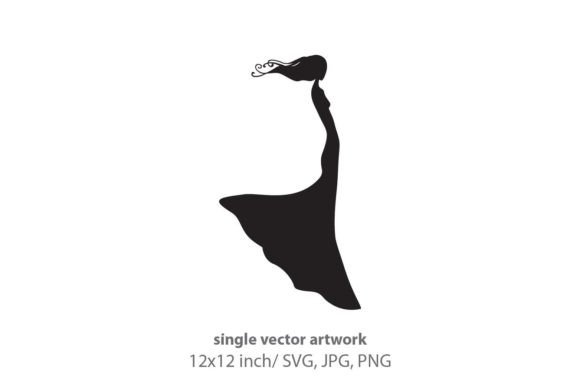
When AFRICAN WOMAN appeared on my screen—a clean, single SVG icon—I didn’t just see a graphic. I saw a stitch count waiting to happen, a hoop size needing evaluation, and a customer’s emotional response before the first thread was even loaded. This isn’t a decorative flourish or an abstract shape. It’s a figure with presence: strong posture, intentional line work, and cultural resonance built into its silhouette and subtle detailing. The design leans into confident minimalism—not overly stylized, not cartoonish, not generic. That balance is rare in Icons meant for embroidery, and it’s exactly what makes AFRICAN WOMAN feel ready for real-world making.
What Happens When You Stitch It—Not Just Preview It
I tested AFRICAN WOMAN as the centerpiece of a custom embroidered tote bag for a local boutique’s Black History Month collection. Cotton canvas, medium-weight tear-away stabilizer, 40-weight rayon thread. Right away, the design held up: no floating stitches, no distortion in the curves, and the negative space around the figure stayed crisp. That’s critical—because AFRICAN WOMAN relies on shape and proportion, not tiny embellishments, to communicate dignity and identity. It translates cleanly into satin stitch outlines and smooth fill areas without demanding ultra-fine detail that frays or blurs on fabric.
On a sweatshirt? Yes—but choose your placement wisely. Centered on the chest works beautifully; high on the sleeve risks stretching the shoulders and distorting the vertical flow. On baby onesies? I’d recommend skipping dense fill areas unless you’re using ultra-soft stabilizer and reducing stitch density manually—it’s not inherently “baby-light,” but it *can* be adapted thoughtfully. As an embroidered patch? Absolutely. Its clean outer edge and balanced weight make it ideal for heat-seal or sew-on applications, especially when backed with twill or felt.
Where It Shines—and Where It Needs Your Attention
AFRICAN WOMAN naturally elevates handmade products that carry meaning: nursery wall art (stitched onto linen pillow covers), holiday gifts (embroidered on tea towels for Kwanzaa or Juneteenth), personalized gifts (monogrammed beside the figure on a cotton apron), and small shop merchandise (think branded tote bags for a wellness studio or community bookstore). It reads as intentional, not incidental—something customers pause to recognize, not scroll past.
But don’t rush it onto stretchy knits or thin voile without testing. The design’s vertical emphasis and defined contours can pull or warp if stabilizer choice or hooping tension isn’t dialed in. On dark fabric? Check contrast early—some thread colors mute the subtlety of the facial profile or headwrap detail. And avoid cramming it into hoops smaller than 4x4 inches unless you’re simplifying key lines yourself. Small corners and tight curves hold up well, but only if your machine handles moderate stitch density reliably.
Real Talk for Etsy Sellers & Craft Business Owners
If you sell finished embroidered goods, AFRICAN WOMAN adds quiet professionalism—not flash, but substance. Customers notice when a design feels considered, not copied. That matters for trust. For digital product sellers: this SVG is flexible for mockups (printable mockups, digital lookbooks, social media previews), but remember—you’ll need to convert it properly into embroidery file formats (PES, DST, JEF, etc.) with appropriate underlay and jump stitch logic. Don’t assume the SVG alone is production-ready.
For apparel decorators: pair AFRICAN WOMAN with complementary running-stitch borders or tone-on-tone fills—not competing graphics. Let it breathe. Its strength is in simplicity, not clutter. And if you’re building brand consistency across products (e.g., matching tote + tea towel + greeting card), use the same thread palette across all items. Consistency reinforces value, especially in handmade presentation.
Design Notes Every Embroidery Professional Should Run Through
- Test on scrap fabric first—especially if using textured weaves like burlap or linen blends.
- Check thread color contrast against both light and dark backgrounds before finalizing your palette.
- Review stitch density in fill areas—if it looks heavy on screen, it’ll feel stiff on fabric.
- Confirm hoop size compatibility with your most-used machines and common project types (e.g., caps need smaller, centered layouts).
- Inspect small details at actual stitch scale—does the headwrap edge stay distinct? Does the neck line read clearly?
- Test black-and-white mockups to verify visual clarity without color crutches.
- Use proper stabilizer: cut-away for knits, tear-away for stable wovens, mesh for lightweight fabrics.
- Verify licensing before selling finished items or digital embroidery files—this SVG is for creating your own logo design, wall art, handmade craft items, printed paper items, stationery, invitations cards, handmade cards, and more—but always confirm commercial use terms directly with the source.
Final Thought: It’s Not Just a Graphic—It’s a Statement You’re Stamping Into Fabric
AFRICAN WOMAN doesn’t shout. It stands. That makes it powerful in embroidery—where every stitch carries weight, texture, and time. It’s not a trend-chasing clipart piece. It’s a design asset that earns its place on a handmade product because it respects the craft, the wearer, and the story behind the symbol. Whether you’re stitching it onto a kitchen towel for a wedding gift, adapting it into an applique design for a child’s backpack, or scaling it for a boutique’s limited-run sweatshirt line—AFRICAN WOMAN performs with quiet reliability. Just give it the attention a meaningful design deserves: test it, refine it, and let its grounded presence speak through your work.