Book with Cowboy and His Horse
A Quiet Story, Clean Lines — What This Design Actually Delivers on Fabric
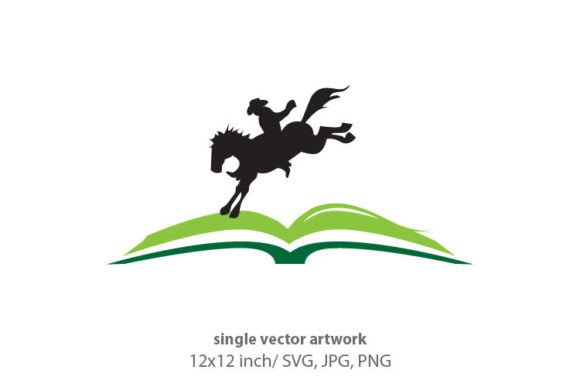
When I opened Book with Cowboy and His Horse for the first time, I didn’t see just clipart—I saw a stitched moment. A gentle, nostalgic narrative: weathered leather cover, a stoic cowboy seated beside his horse, both still and grounded, like something pulled from a well-loved children’s book or a vintage Western postcard. The vector-based simplicity—no heavy gradients, no over-rendered shadows—means it breathes on fabric instead of fighting it. That matters. Especially when you’re stitching for real people who’ll hold, wear, wash, and gift your work.
Where It Lives Best: Tote Bags, Nursery Pillows, and Thoughtful Gifts
I recently tested Book with Cowboy and His Horse as the centerpiece for a custom embroidered canvas tote—intended for a local ranch-themed baby shower. The design scaled cleanly to 4.5 inches wide, sat comfortably in a standard 5×7 hoop, and translated beautifully into satin-stitched outlines with soft fill-stitch pages and horse contours. Customers responded not just to the imagery, but to its calm intentionality—it felt handmade, not mass-produced. That same quiet strength works equally well on:
- Organic cotton tea towels (stitched with matte cotton thread for kitchen warmth)
- Unstructured denim aprons (where clean lines read clearly against texture)
- Twill-backed patches for scout groups or school programs
- Soft minky baby blankets (with reduced stitch density to avoid stiffness)
- Personalized sweatshirts for small-town rodeo volunteers
It’s not flashy—but that’s its advantage. In a market saturated with busy, over-digitized icons, this design earns trust because it looks *considered*, not automated.
Where to Pause Before Stitching
Book with Cowboy and His Horse isn’t built for micro-detail embroidery. The book’s spine, the horse’s ear tip, and the cowboy’s hat brim are clean shapes—not intricate lacework. That’s smart design discipline, but it means you’ll want to be intentional about context:
- Small hoop sizes (under 4 inches): Avoid shrinking below 3.25 inches—the saddle detail and book title legibility start to blur in fill stitch.
- Stretchy or thin fabrics: Use medium-weight cutaway stabilizer. The open negative space around the figures needs support, or the design can “pull” on knit blends.
- Dark or textured backgrounds: Test thread contrast early. Light tan or oatmeal thread reads warmly on navy twill; charcoal gray pops cleanly on cream linen. Avoid white thread on off-whites—it flattens the hierarchy.
- Curved surfaces (caps, curved pillow fronts): The balanced, centered composition holds up better than asymmetrical icons—but always do a baste-and-check stitch on scrap first.
What It Adds to Your Craft Business—Beyond the Stitch
As an Etsy seller and small shop product developer, I look at every design through two lenses: *how it stitches*, and *how it sells*. Book with Cowboy and His Horse strengthens both. Its thematic clarity—storytelling, heritage, gentle masculinity—makes it instantly recognizable in mockups and listings. Buyers searching for “Western baby gift,” “ranch-themed nursery,” or “personalized cowboy tote” land on it and *get it*—no explanation needed. That cuts decision fatigue and lifts conversion.
More subtly, it supports brand consistency. If your shop leans into timeless, tactile, story-driven goods—not trend-chasing novelty—this icon quietly reinforces that voice. It doesn’t scream. It invites. And that builds repeat customers.
Practical Designer Notes You’ll Actually Use
Before sending Book with Cowboy and His Horse to your machine or listing it as a digital embroidery file, here’s what I do—and recommend you do too:
- Test on scrap fabric first, especially if pairing with applique elements or layered text.
- Review stitch density in the book’s cover area—vector smoothness doesn’t guarantee low-density digitizing. Some versions may overfill flat zones; adjust if needed for drape.
- Confirm hoop size compatibility before prepping client files. At full 12×12 artboard scale, it’s oversized for most apparel—but scaling down is effortless thanks to its SVG roots.
- Inspect corners and curves in black-and-white mockups. Does the horse’s tail read as shape—or just a smudge? Does the book’s binding line stay crisp?
- Compare light and dark fabric previews side-by-side. This design gains depth on rich backgrounds but loses subtlety on very light heathers.
- Use tear-away + cutaway combo stabilizer for structured items (like patches or caps), and lightweight fusible for delicate baby items.
- Verify licensing scope before selling finished embroidered products or bundling it into digital embroidery packs. Since it’s labeled “You Can use this digital graph,” confirm whether commercial resale of stitched goods is included—or if attribution or limits apply.
Final Thought: A Design That Supports Your Hand, Not Your Hype
Book with Cowboy and His Horse won’t go viral. It won’t dominate Pinterest feeds with neon gradients or animated loops. But it will sit perfectly on a hand-stitched kitchen towel gifted to a new parent who grew up on a Montana ranch. It will hold steady on a child’s backpack after six months of school bus rides and muddy boots. It will feel like part of the story—not just decoration slapped on top.
That’s the mark of strong embroidery design: it serves the product, honors the craft, and respects the person holding it. Whether you’re digitizing for clients, building a boutique collection, or creating personalized gifts for your own shop, Book with Cowboy and His Horse is a grounded, versatile, quietly confident asset—one that earns its place in your design library by working, not just looking pretty in a preview.